Deep Soaks vs. Daily Sprinkles: A Field Guide to Garden Watering Strategies
Understanding how to water is one of the simplest, most impactful skills in the garden — and one of the most observed. Two common approaches dominate: deep, infrequent watering (the « deep soak ») and shallow, frequent watering (the « daily sprinkle »). Both have their place. This field guide compares the approaches, highlights when each is useful, and gives practical observational tests to choose the best method for your plants and site.
How the two approaches differ
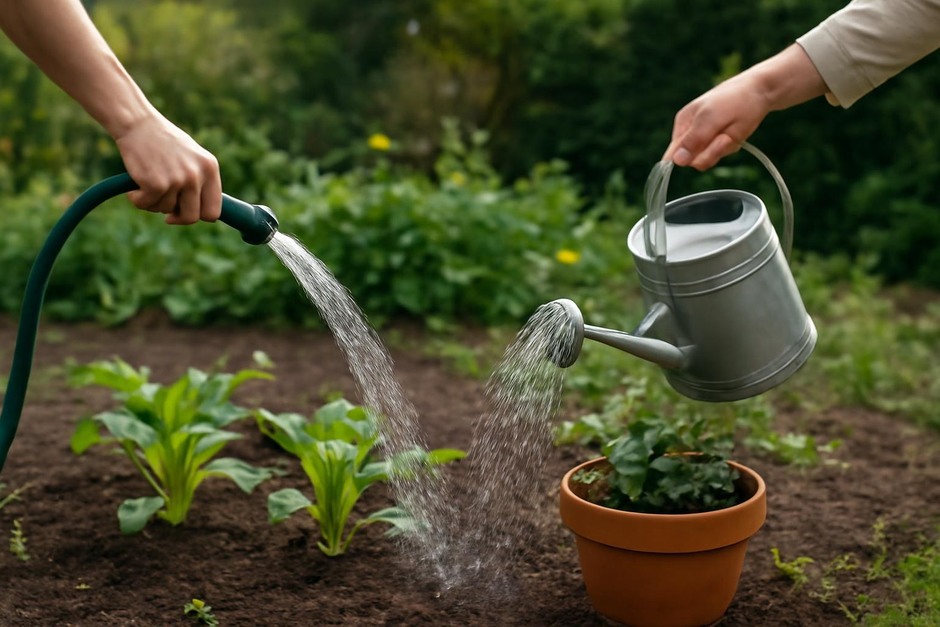
Deep, infrequent watering (the deep soak)
- Goal: Wet the soil to depth so roots grow downward and access stored moisture.
- Method: Apply water slowly and steadily so it soaks in rather than running off. Aim to wet the root zone — commonly 6–18 inches depending on plant type.
- Common uses: Established shrubs, trees, perennials, and lawns in warm seasons; drought-prone sites.
- Pros: Encourages deep rooting, improves drought resilience, reduces surface evaporation and some disease pressure tied to wet foliage.
- Cons: Requires longer watering periods or slow-release systems (drip, soaker hoses); can be less responsive to short-term surface needs like new seedlings.
Shallow, frequent watering (the daily sprinkle)
- Goal: Keep the top few inches of soil consistently moist for immediate root access.
- Method: Apply smaller amounts of water at shorter intervals — often every day or every other day.
- Common uses: Seedlings, new transplants, small containers, and very sandy soils that drain quickly.
- Pros: Responsive to young plants’ needs, quick to correct wilting in containers, simple with a watering can or light irrigation.
- Cons: Promotes shallow root systems, increases evaporation losses, may encourage certain pests and diseases if foliage stays wet.
Observational tests to help you decide
Rather than choosing by habit, observe your plants and soil. Use these simple tests over a week or two to see how the site behaves.
- Screwdriver or soil probe test: Insert a long screwdriver or probe into the soil before and after watering. If it pushes in easily only in the top 2–3 inches but meets resistance deeper, shallow watering is dominating. If it penetrates deeper after a session, your water reached the root zone.
- Container weight test: Lift a container before and after watering. Note how quickly it lightens. Containers that dry out in a day or two typically need more frequent checks and may favour shallow sessions for young plants, then switch to deeper soaks to promote root growth.
- Surface runoff observation: Water slowly for a few minutes and watch. If water pools and runs off, slow the flow or switch to shorter, repeated pulses to allow infiltration — otherwise neither approach is effective.
- Leaf and growth signs: Wilting in heat can be an immediate cue, but note recovery timing. A plant that perks up quickly after a small sprinkle likely relies on surface water; a plant that takes longer to recover may be adapted to deeper moisture and benefit from soaking.
How to choose — a practical decision flow
Use these guiding principles based on plant stage, soil type, and climate.
- New transplants and seedlings: Start with shallow, frequent waterings to keep the rootball moist, then transition to deep soaks as roots establish (usually several weeks to a couple of months).
- Containers and hanging baskets: Containers dry quickly. Combine both approaches: a deeper soak every few days plus light top-ups on hot days. Consider switching to larger pots or adding organic matter to retain moisture.
- Sandy soils: Tend to drain fast and may require more frequent watering or very slow deep soaks to push water into the root zone. Mulch helps reduce evaporation.
- Clay soils: Hold moisture but resist quick infiltration. Use slow deep soaks to avoid surface pooling and to encourage roots to grow into the soil rather than staying near the surface.
- Established shrubs and trees: Favor deep, less frequent waterings to support long-term root development. Occasional shallow moisture won’t replace the benefits of a deep soak.
- Hot, dry spells: Observe — brief wilting in heat can often be remedied with a deep soak rather than repeated surface wetting. Young plants still need gentler attention.
Practical tips for implementation
- Water early in the morning to reduce evaporation and give foliage time to dry.
- Use soaker hoses or drip irrigation for controlled deep watering; a slow trickle from a hose works for small beds.
- Mulch vegetable beds and flower borders to conserve moisture and moderate soil temperature.
- Record one or two observations each week — soil probe depth, plant vigour, and container weight. Small notes build reliable local knowledge about how your garden behaves.
Choosing between deep soaks and daily sprinkles need not be a strict either/or decision. The most resilient gardens use a combination: shallow care for the youngest plants, deeper soaks to develop robust roots, and small adjustments based on the soil and weather you observe. Watch, test, and adapt — your garden will tell you what it needs.